
fantasy
Gretel & Hansel: A Film For Those Who Love Aesthetically Beautiful Films


Tell me the fairy tale again.
It’s too scary, you’ll start seeing things that aren’t there.
In recent years we have been flooded with live-action versions of well-known Disney fairy tales. These usually follow the fairytale story without deviation. Even the appearance and atmosphere are mostly identical to the original. However, this isn’t the case with “Gretel & Hansel”. Director Osgood Perkins has gone to great lengths to make it an idiosyncratic creation. It largely corresponds to the original story of the Brothers Grimm. But the moral of the story is very different from the original fairy tale. So, no nasty stepmother. No pebbles or bread crumbs. In the original fairy tale, Hans was more inventive. Here he’s a helpless little fellow dependent on his bigger sister. But it’s mainly the role Gretel plays in this story and how this character evolves. Hence probably also the switching of the names in the film title, which indicates Gretel’s part is more important.

Damn mushrooms.
The period in which it takes place is comparable to that in “The VVitch” or “Apostle”. Most likely at the time of the great famine in the 14th century, when it was difficult for many to survive. Most lived in shabby houses and had no means to meet their daily needs. Similarly, the mother of Gretel and Hans, who chases the children out of the house with unmistakable words (and a dangerous-looking lumberjack ax). First, they are advised by a friendly man to look for work and join a group of lumberjacks and especially not to deviate from the path. Hunger and the discovery of delicious looking mushroom causes the two children to leave the path and discover a black house in the forest.

A dark, eery, and disturbing mood.
The mushroom scene can be called amusing and already suggests that this film is certainly not an accessible version of the known fairy tale. It’s also not recommended to watch this with your kids as you did with “The Lion King”. This film is too dark, gloomy, and perhaps too terrifying for small children. Even though I found the label “horror” a bit exaggerated. “Gretel & Hansel” isn’t really creepy. Don’t expect the typical elements of a horror. No jump scares. No gory scenes or possessed creepy persons. But certainly, you’ll experience an unpleasant and disturbing feeling throughout the whole movie. An intense, eery atmosphere in which you are immersed.

Artistic and experimental sort of film.
I also fear that due to its artistic character and experimental production, this morbid fairy tale isn’t for everyone. Many horror fans will be terribly disappointed and rather portray it as a pretentious movie. Evildoers are of course the lack of tension and the slow pace. But for me, it was the unique atmosphere and the imaginative story that made it an exciting experience. The design of the witch house (without gingerbread walls decorated with all kinds of sweetness) will confuse you. A pitch-black, modernist house built with contemporary materials and styles. Not exactly something you will start nibbling on. On the one hand, the interior is characteristic of that specific time. But on the other hand, there are also style features that belong to the present era. And the richly filled table full of delicious stews and pastries is a feast for the eyes.

Aesthetically beautiful film.
What appealed to me the most was the excellent cast. Alice Krige as the terrifying and devilish witch in particular was simply fabulous. And Sophia Lillis also plays the role of Gretel convincingly. A young girl with unexpected future prospects. The beautiful music and sound effects together with the used color palette, provided a special atmosphere. Only the denouement I found a bit unfortunate and not appropriate for the slow tempo of the film. I can certainly enjoy a straightforward version of a fairy tale. But this contrary version managed to surprise me. Definitely a film for those who love aesthetically beautiful films.
My rating 7/10
Links: IMDB




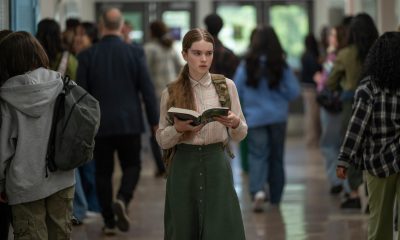


Defying expectations have never looked so good. Wicked: For Good swoops onto the big screen with just the right amount of magic, mischief, and musical prowess to keep audiences under its spell. Whether you’re an Oz-obsessed fan or a newcomer just following the yellow-brick hype road, this film ensures you’re in for a wickedly fun time — broomsticks optional.
Plot
Now demonized as the Wicked Witch of the West, Elphaba lives in exile in the Ozian forest, while Glinda resides at the palace in Emerald City, reveling in the perks of fame and popularity. As an angry mob rises against the Wicked Witch, she’ll need to reunite with Glinda to transform herself, and all of Oz, for good.

Movie Review
Wicked: For Good is the enchanting cinematic payoff fans of the Broadway sensation have waited years to see. What makes this adaptation soar is not only its visual spectacle but the emotional depth it brings to an already beloved story. With stunning set-pieces and a vibrantly reimagined Oz, the film manages to feel both familiar and refreshingly new.
Erivo returns with real gravitas as Elphaba — now firmly embodying her role as the Wicked Witch of the West. Her performance is powerful, emotionally layered, and yet more vulnerable here than ever. She balances Elphaba’s fierce sense of justice with a deep-seated loneliness, making her stakes feel utterly real. Grande reprises her role as Glinda, and she brings a luminous charm and warmth that contrast beautifully with Erivo’s intensity. In For Good, Glinda’s journey becomes darker and more reflective, and Grande handles that tonal shift deftly, giving Glinda more heart and less glitter — without losing her signature effervescence. As the Wizard, Goldblum brings his trademark charisma and sly menace. His character feels morally complicated in this installment — more than just the typical “all-powerful ruler,” his performance hints at decay and corruption, which gives the film a richer, more ominous undercurrent.

A Truly Magical Cast
Bailey returns as Fiyero, and his presence feels more grounded and serious than in the first film. He’s less whimsical and more conflicted, which works really well given the emotional and romantic tensions at the heart of For Good. His chemistry with both Glinda and Elphaba helps anchor some of the film’s more intimate moments. Yeoh brings elegance and a subtle menace to Madame Morrible. She’s not just a power broker in Oz — her performance suggests hidden motivations and emotional stakes. She’s no one-note villain, and Yeoh makes her feel like someone operating in shades of grey.
Boq, played by Slater, has a more consequential arc in this film than before. In For Good, his transformation (both emotional and narrative) is more defined, and Slater gets more room to shine. His path feels earnest, and he does well to bring complexity to a character who could easily be sidelined. Bode plays Nessarose, Elphaba’s sister, and the film gives her storyline more weight. Notably, on-screen adaptations changed some aspects of her arc (for example, she flies instead of walking, in the film version), which has raised conversation. Her performance is heartfelt, and her portrayal adds both emotional tension and a fresh dynamic to the sisters’ relationship.
The movie thrives on its central friendship — a layered, complex connection that evolves with warmth, humor, and heart. Both lead performances shine brilliantly, bringing dynamic charisma and genuine vulnerability to their roles. Their chemistry is magnetic, and every shared moment reinforces the emotional core of the narrative.
Musically, longtime fans will rejoice: the iconic songs land with powerfully. The added cinematic scale allows the soundtrack to envelop viewers more completely, while fresh arrangements and new compositions enrich the experience without overshadowing the classics. The choreography and vocal performances elevate each number, crafting scenes that feel like pure, goosebump-filled magic.
Catch the Wicked For Good soundtrack on Spotify:
From a technical standpoint, the film sparkles. Production design embraces creativity — from whimsical costumes to awe-inspiring landscapes that expand the lore of Oz beautifully. Thoughtful lighting and ambitious camera work turn fantasy into something tangible across every glittering frame. Cameos from certain Wizard of Oz characters ties the story of Glinda and Elphaba into the classic Oz mythology, while not shifting the focus away from the witches.
Tonally, the movie balances humor, heart, and high-stakes drama with grace. It honors big Broadway emotions while embracing the subtleties that film storytelling allows. Themes of identity, courage, social perception, and moral complexity are delivered in a way that audiences of all ages can connect with.
I highly encourage you to go and watch the prequel, Wicked, and perhaps even consider watching the 1939 classic, ‘The Wizard of Oz’.

Concluding Remarks
At its best, Wicked: For Good reminds viewers that every story has more than one perspective — especially when the world insists on labeling someone a villain. The pacing is brisk yet grounded, ensuring the emotional journey remains compelling from the first note to the final curtain. The returning cast is one of the biggest strengths of Wicked: For Good. Erivo and Grande remain the heart of the story, delivering performances with real emotional weight. The supporting cast — Goldblum, Yeoh, Bailey, Slater, Bode, and others — deepen the world of Oz with nuance, not just spectacle. Their character arcs feel earned, and the film does justice to the prequel setup laid down in the first movie.
A triumphant musical fantasy that casts a spell from start to finish.
Even without spoilers, it’s easy to say that Wicked: For Good doesn’t just defy gravity — it defies expectations. With unforgettable performances, a beloved soundtrack revitalized, and dazzling cinematic artistry, this film is set to become a classic of the genre.
If you’ve been waiting “for good” for this adaptation… good news. The wait was worth it. I rate this movie 4 out of 5. There is no post-credits scene, so no last minute trick unfortunately. Make sure to follow the yellow-brick road to your nearest cinema, and experience the magic on the big screen, because there is no place like cinema!
Here is the official trailer of Wicked For Good:
fantasy
Into Eu Gwald: Sisterhood, Survival, and Magic in The Wicked Lies of Habren Faire | A Review of Anna Fiteni’s Welsh Romantasy


My heartfelt thanks to Electric Monkey Books for gifting me an ARC of “The Wicked Lies of Habren Faire” through NetGalley in exchange for my honest review. It felt less like receiving a book and more like being handed a key to a secret, rain-dampened gate that opened onto a world of shadowed forests, silver-threaded skies, and stories that will linger in my heart long after the last page.
UNWAITH AR Y TRO (ONCE UPON A TIME)
Some stories do not simply invite you in; they call to you, like the distant echo of a harp over the misted hills, the way the wind whispers through gorse and heather. “The Wicked Lies of Habren Faire” is one such tale. It is a dark, glittering, and deeply Welsh romantasy that slips under your skin like the shadow of a half-forgotten lullaby, blending the perilous beauty of Pan’s Labyrinth, the whimsy and world of Jim Henson’s Labyrinth and the Dark Crystal, the yearning of Bridge to Terabithia, and the wonder of The Spiderwick Chronicles and the decadence of Peter Pan but shot through with the heart, hiraeth, and mythos of Cymru.
From the first page, “The Wicked Lies of Habren Faire” had me utterly spellbound, Anna Fiteni’s words weaving an eerie, otherworldly atmosphere that seemed to curl like mist around my shoulders. Every line shimmered with magic, but it was never a safe magic; it was the kind that glints with danger just beneath the surface, daring you to step closer. As I read, I felt that familiar pull in my chest, hiraeth, a yearning for loved ones long gone, and the worlds hidden in our hills and streams. This book is steeped in that same soul-deep Welsh folklore, populated by whimsical, wild, and sometimes frightening beings born from the old beliefs of my people, like Mari Lwyd, the Cyhyraeth, Ceffyl Dŵr, and Pwca. And yet, amidst the peril, there is beauty, warmth, and a fierce heartbeat, a reminder that even the darkest tales can hold the light.
Set in a small 1800s mining village, Fiteni’s debut is steeped in the grit and poetry of Wales: the coal dust that clings to your skin, the chapel bells, the stubborn survival of a people whose land and language (iaith y nefoedd, “the language of heaven”) have been stolen and suppressed, yet endure. Sabrina Parry, our prickly and imperfect heroine, has learned to survive with sharp words and sharper wits. Her sister Ceridwen, gentle, romantic, with a heart too soft for the world, vanishes into the gwyll (twilight) of the nearby woods, leaving behind an iron ring. To save her, Sabrina must cross into Eu Gwald, the perilous realm of the Tylwyth Teg. And here, Fiteni gives us a fairytale as it should be: beautiful and rotting, intoxicating and dangerous. This is not the softened, modern Fae; these are the tricksters of old tales, the kind my Tad-cu used to whisper about at bedtime. The ones you’d leave milk out for… and pray never to meet. In Habren Faire, the moonlight hides teeth, and bargains are binding in ways no mortal can quite escape.
I cried tears, real, unashamed tears, because this world and these characters have a chokehold on me, the kind that leaves you thinking about them long after you’ve closed the book. Sabrina Parry has steamrolled her way into my heart with all the grace of a storm battering the coast. She is everything you’d expect a fantasy heroine not to be, and yet somehow, so much more: spiteful, unflinchingly honest in her lies, a troublemaker who cheats, irritates, and gleefully upends lives when it suits her. She looks the neat little path destiny has drawn for her square in the eye, and probably punches whoever dared to suggest she follow it in the first place. And still, she is fiercely loving, deeply loyal, the kind of person who will knock you out or cut off your finger if it means protecting the people she cares for. Fiteni writes her with the same rough-edged, beating heart as the March sisters from Little Women, and her family — her Da, her sister Ceridwen, her Gran- feel as though they’ve stepped straight out of a literary classic and into this wild fae world. There’s a touch of Alice in Wonderland’s madness here too, all swirled with a Tim Burton-esque shadow, making it both unsettling and utterly irresistible.
Neirin oh, Neirin, the annoyingly magnetic fae prince who barges into Sabrina’s quest and into my thoughts far more than I care to admit. He is cut from the same stardust-and-sin cloth as David Bowie’s Jareth, all vanity and silver-tongued charm, at once dazzlingly clever and utterly foolish. His name feels almost too noble for someone so deliciously self-absorbed, so preening, so obsessed with humanity, and yet dangerously unpredictable. There’s something slick in the way his brown eyes catch the light, his lashes casting shadows like spider legs across his cheek. His wavy black hair is streaked with silver, gleaming as if someone dipped a brush in moonlight, and he wears black velvet embroidered with constellations, stars, moons, and planets stitched in silver thread, like he’s wearing the night sky itself. Fiteni infuses him with an edginess that reminds me of Puck from A Midsummer Night’s Dream; indeed, the whole Ellyllon court has that Shakespearean blend of mischief, beauty, and lurking peril. Neirin is both a lovable rogue and playful trickster, and the slow-burn tension between him and Sabrina is a quiet thread woven into the greater tapestry, all the more intoxicating for its restraint. With betrayals twisting in the dark and their banter crackling from irritation to something far more dangerous, I found my heart racing every time they shared the page.
The LGBTQ+ representation in The Wicked Lies of Habren Faire is woven as seamlessly into the fabric of the story as the silver threads in Neirin’s velvet coat, natural, unforced, and all the more beautiful for it. Fiteni doesn’t treat queerness as a spectacle or side note; it simply exists here, alive and unashamed, as it should in any world worth escaping to. Among the Tylwyth Teg and all their tricksy kind, selkies are slipping between sea and shore, and mermaids, morgens, whose songs curl through the waves with love and longing for more than one kind of heart. In a tale so deeply rooted in Welsh folklore and history, it felt like a quiet, defiant act of reclamation, a reminder that our stories, like our people, have always been more varied, more complex, and more wondrous than the narrow paths history tried to confine them to.
Thematically, Fiteni captures something I rarely see done so deftly in fantasy: the bittersweet ache of growing up, of leaving home, of returning to find it altered, and knowing you have been altered too. She threads in grief with quiet grace: grief for the dead, for the selves we leave behind, but also for the loss of stories and traditions under the weight of colonisation. As a Welsh reader, I felt my heart clench at the way she honours the mining communities, their sacrifices, their stolen labour, their resilience and at the way she refuses to sand the edges off Welsh identity.
“The Wicked Lies of Habren Faire” feels, to me, like a love letter to Wales, a celebration of everything that makes my homeland what it is. Too often, romantasy novels borrow from Welsh myth and landscape without ever acknowledging, let alone interrogating, the roots of their inspiration. But Fiteni does not just nod to Wales; she treasures it, honours it, and breathes life into its heart. Giving us, the reader, the relentless rain that slicks the slate roofs, the forests that seem to go on forever until they spill into the mist, and the ancient stone castles that rise from the hills like something out of a dream. This is a Wales that is both real and mythical, where the grit of the coal seams lies alongside the shimmer of faerie light, and where every page feels steeped in that aching, longing for home.
There is hiraeth in these pages that deep, untranslatable longing for a place, a time, a feeling that can never be fully recaptured. And yet, there is hope too. Hope in the fierce, messy love between sisters. Hope in the idea that even bargains with the Fae might be survived, if not won. Hope in the survival of the story itself. Fiteni’s prose is lush without being overwrought, laced with the cadence of a fireside folktale. She balances whimsy with peril, tenderness with sharp teeth. The ending is as it must be bittersweet, leaving you breathless, a little bruised, and aching to walk again among the shadowed groves of Eu Gwald.
There are books that you finish and remember for their plot, and then there are books that leave you with words that root themselves deep in your bones. “The Wicked Lies of Habren Faire” gifted me more than one such line, the kind you carry like talismans. “Even when you’re as old as me, if you’re not happy, then you’re not at the end,” is a quiet, defiant reminder that life is not a straight path to some fixed point, and that joy, no matter your age, is worth chasing until your last breath. “People love us for our efforts”, spoke to the marrow of my being; that we are valued not solely for success, but for the trying, the striving, the reaching beyond our limits. Fiteni’s reflection that “our lives are small… a speck of dust on an old coat or a mayfly at the start of its first and only day, but from them spring a thousand stories” is both humbling and electrifying, a reminder that even the smallest existence can be a universe to someone. The notion that “we’re all being used by a big house somewhere” is a bitter truth dressed in whimsy, hinting at the invisible powers, be they political, economic, or fae, that shape our lives without consent. And beneath it all is the warning: “All the best lies sprout from a seed of truth.” It is a lesson in discernment, in knowing that what feels real may only be the bait, and that when you have less, the things you hold, love, trust, and belong matter infinitely more. These quotes did not just shape my reading experience; they shaped me.
For me, “The Wicked Lies of Habren Faire” was like finding the path to the worlds I used to dream of as a child, listening to my grandad speak of the Tylwyth Teg worlds I thought I’d outgrown, but which were only sleeping. This book woke them, giving me back my sight and for that, I am grateful.
“The Wicked Lies of Habren Faire” will step into the mortal world on August 28th, 2025, and I wholeheartedly recommend letting it sweep you away the moment it does. This is a tale spun of rain and starlight, of hiraeth and heartbreak, of cruel fae bargains and the kind of love, fierce, messy, unyielding, that can outwit even the oldest magic. It is a story to lose yourself in and to carry with you, like a secret charm tucked in your pocket, long after you’ve left the woods behind.
A spellbinding debut — dark as slate, bright as starlight, and full of hiraeth.


Right off the bat, I want to say, that Mufasa: The Lion King is superior to its 2019 predecessor. But the unfortunate truth is, that bar is very low. Like many people, I wasn’t the biggest fan of Jon Favreau’s The Lion King adaptation which felt soulless even though it was a massive box office success, it left people with a bitter taste in their mouth. So it was likely that we wouldn’t get a continuation of Simmba’s story, so that doesn’t leave many ways to tell another story in this universe. A prequel with a largely original story sounded like a decent direction to go in after The Lion King.
Barry Jenkins was certainly an unexpected but exciting choice for a blockbuster like this. He tries his best to breathe new life into the iconic Pride Lands by exploring the origins of Mufasa and Taka (who eventually goes on to become Scar). Jenkins, known for Moonlight and If Beale Street Could Talk, brings surprising emotional depth to what could have easily been a soulless cash grab. The facial emotions are significantly better this time and we actually get an idea of what the characters are going through. This also takes the weight off voice actors who had to do all the heavy lifting in the last one.
Technically, the movie is as stunning as expected. The breathtaking photorealistic visuals are back, with meticulous attention to every leaf, ripple of water, and blade of grass. The Pride Lands come alive in all their splendor, creating a visual experience that demands to be seen on the big screen. The character animations are fluid and much more expressive enough to evoke connection without sacrificing realism. Jenkins really tries to present a more profound emotional tone, exploring themes of family, loss, and legacy with more nuance than one might expect from a Disney blockbuster.

(L-R): Sarabi (voiced by Tiffany Boone), Taka (voiced by Kelvin Harrison Jr.), Mufasa (voiced by Aaron Pierre), and Rafiki (voiced by Kagiso Lediga) in Disney’s live-action MUFASA: THE LION KING. Photo courtesy of Disney. © 2024 Disney Enterprises Inc. All Rights Reserved.
At its heart, the film focuses on the journey that shaped Mufasa into the king we know, and how two brothers turned into enemies. His journey takes very formulaic routes and hardly offers anything new. The brothers turned enemies story is also done multiple times and doesn’t surprise or impress at any point. The story has moments of beauty but struggles to get you invested or emotionally attached to it. The script is weak and definitely needed help from the visuals to bring the entertainment value. Thankfully the lack of novelty in the writing is partly compensated by the breath-taking visuals. There are some really impressive sequences that leave you impressed and engaged solely due to the cinematography.
But where Mufasa truly disappoints is in its music. Lin-Manuel Miranda is nowhere near his best and the sings are decent at best. Not a single song stayed with me once I left the screening. The middle portions of the film are particularly strong, offering intriguing subplots and emotional beats that elevate the narrative. Miranda is master at his work, but here he really struggles to get the beats right. The voice cast is solid across the board. Aaron Pierre captures Mufasa’s spirit, while Seth Rogen and Billy Eichner are as charming as ever. Kelvin Harrison Jr., struggles with his British accent.

(L-R): Mufasa (voiced by Aaron Pierre) and Taka (voiced by Kelvin Harrison Jr.) in Disney’s live-action MUFASA: THE LION KING. Photo courtesy of Disney. © 2024 Disney Enterprises Inc. All Rights Reserved.
Another aspect that the script gets wrong is the structure and character usage. It shouldn’t have taken the flashback storytelling route as it doesn’t work at all and only takes you out of Mufasa‘s story. It also never justifies the inclusions or Pumba and Timon, and they feel forced into the story. The final act feels emotionally satisfying but it really messes up Taka’s arc. His origin story is surprisingly underwhelming and frankly lazy. The story of his rivalry with Mufasa will remind you a lot of Transformers: One that came out earlier this year, and they did it way better. It’s also as if the writers hesitated to take bold narrative risks, instead settling for a resolution that feels too safe and familiar.
Mufasa: The Lion King is a visually stunning prequel that adds compelling world-building and heartfelt moments but struggles to justify its existence. The rushed narrative underdevelops key characters, and while Barry Jenkins’ thoughtful direction adds gravitas, it can’t overcome the contrived screenplay. The voicework is solid, but the music by Lin-Manuel Miranda is surprisingly underwhelming. It is superior to its 2019 predecessor, but the film still lacks the soul needed to truly roar with life.
Mufasa: The Lion King hits cinemas on December 20.
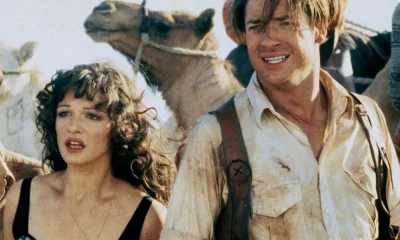

The Mummy: Book of the Dead Revealed as Official Title for Brendan Fraser and Rachel Weisz Sequel
Universal Pictures has officially revealed the title of the next chapter in The Mummy franchise, and it is leaning straight...

Matt Reeves confirms he is staying on The Batman Part II
Matt Reeves has directly addressed his temporary absence from The Batman Part II, making it clear that he is still...

James Mangold’s Swamp Thing Is Still Moving Forward at DC Studios
James Mangold’s long developing Swamp Thing movie is still alive at DC Studios, with studio co chairman Peter Safran confirming...


Rockstar Releases New Grand Theft Auto VI Launch Trailer Ahead of November Release
Rockstar Games has released the official launch trailer for Grand Theft Auto VI, giving fans another look at Jason, Lucia...

Clayface First Reactions Praise DC’s Brutal Body Horror
The first reactions to DC Studios’ Clayface have arrived, and the upcoming Batman villain film appears to be leaning fully...


Ryan Coogler’s ‘The X-Files’ Reboot Officially Ordered to Series at Hulu
The truth is officially heading back out there. Hulu has given a full series order to Ryan Coogler’s upcoming reimagining...


